The Effects of Artificial Intelligence on the Environment
If you have ever been on social media you have likely seen AI videos of dancing cats, dogs with eight legs, or Will Smith eating spaghetti. You may have also noticed that these images and videos are getting harder and harder to recognize as AI. If you have ever been a student, you have probably said something along the lines of “it’s okay, I’ll just use ChatGPT.” Alongside AI’s negative impact on the human brain and cognitive function, it is also extremely detrimental to the environment.
First, I would like to preface by saying that when I say “AI” in this article, I am mainly referring to generative AI (a system of algorithms or computer processes that can create novel output in text, images or other media based on user prompts. These systems are created by programmers who train them on large sets of data). Not Artificial Intelligence used in the professional fields (such as medicinal). I do believe that AI will become a somewhat important factor in the future of productivity and efficiency, however, this article is not directed at that.
For those unfamiliar with data centers specifically for AI, Josh Gabbatiss from Carbon Brief tells us “The process of training and deploying AI models relies on data centres – large, energy-intensive facilities that house computing infrastructure” (Gabbatiss). Moreover, if you have not heard of their effect on nearby housing, I urge you to look it up, it is astonishing. All across the world there are these AI data centers, (though there are also data centers that are not used for AI) the sites for massive computers powering artificial intelligence, such as ChatGPT and those videos of dogs with eight legs, with hundreds of thousands of wires and hot bolts of electricity running through them. Think about how your phone heats up when you are playing a game, while also listening to music, while also on FaceTime with a friend, who is also playing a game, while also charging your phone. When our small personal devices heat up, it is because we have used them for too long or done too many things on them at once. The way to cool them is to simply stop using the device. I know I have personally said, “I have to go, I think my phone is about to explode.” Now think about that, but happening all day everyday across millions of square feet. With no immediate way of stopping the device usage, the way to cool them down is to use a lot of water. One ChatGPT prompt is equivalent to powering a lightbulb for fifteen minutes, or using about one bottle of water. There are approximately 2.5 billion prompts given to ChatGPT a day.
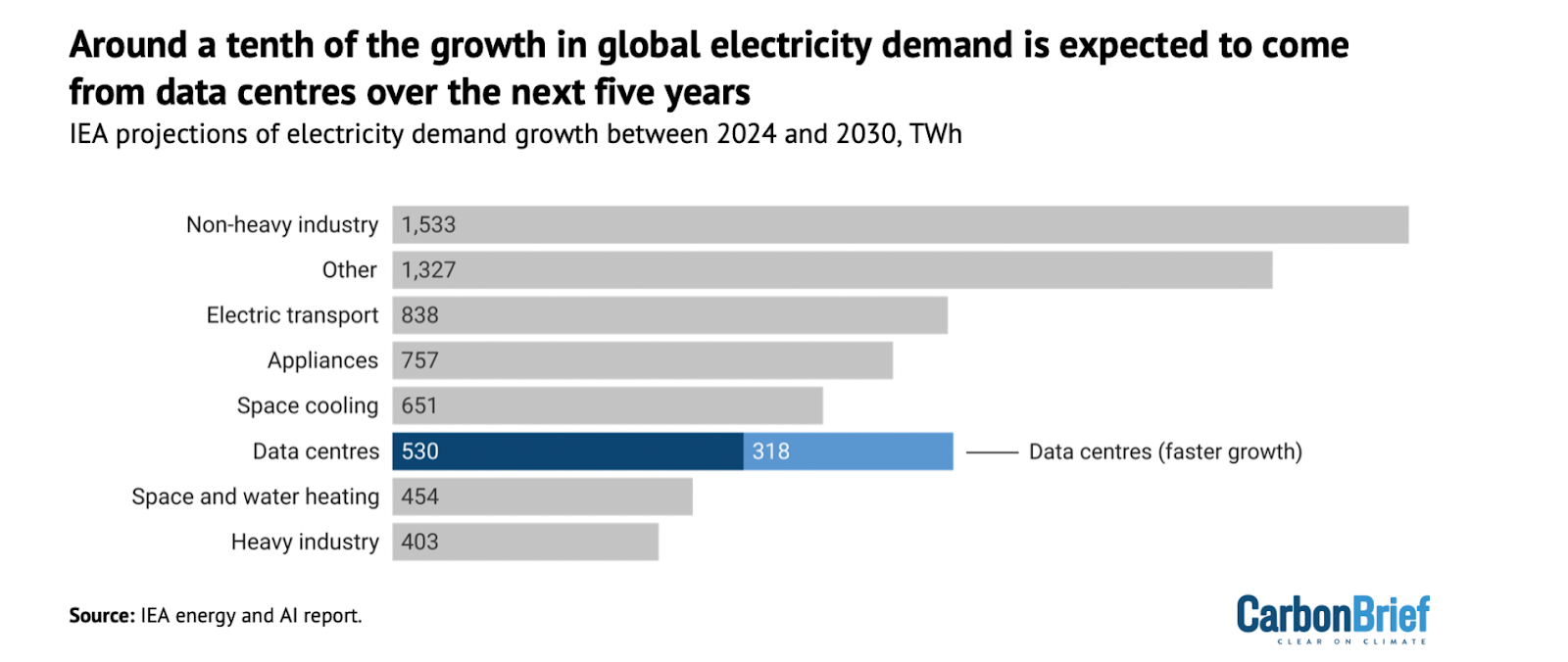
An article about AI’s environmental impact tells us that “globally, AI-related infrastructure may soon consume six times more water than Denmark, a country of six million, according to one estimate” (UNEP). Considering that so much of humanity currently lacks access to clean water, let alone water at all, this impact must be considered. Water that is used to cool a giant machine powering the death of intellectuality could have been given to families across the globe who barely have enough water to survive. According to the Environmental and Energy Study Institute, “One report estimated that U.S. data centers consume 449 million gallons of water per day and 163.7 billion gallons annually (as of 2021)” (Yañez-Barnuevo). As of 2021. We are now five years past 2021.
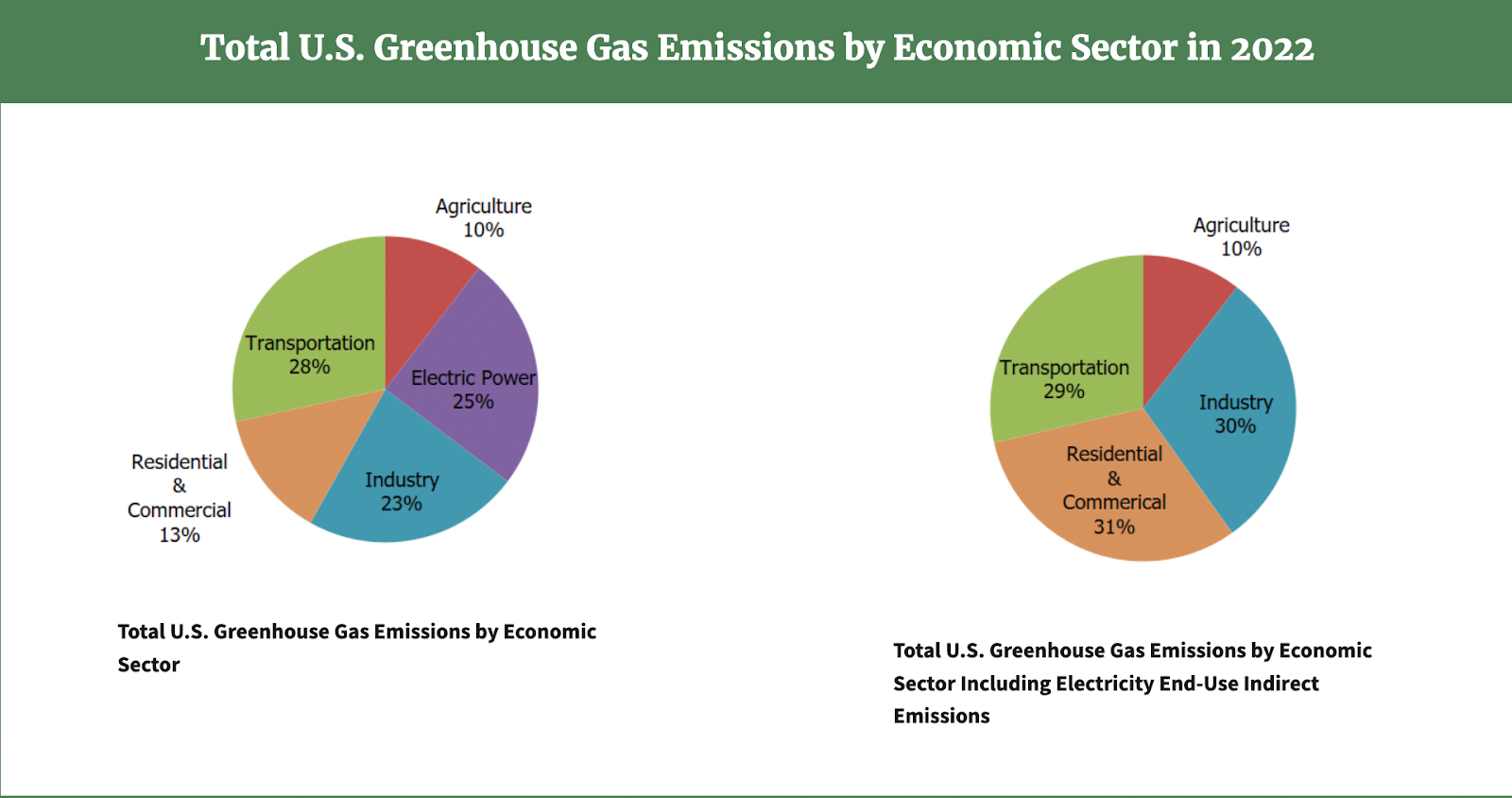
When I’ve talked to people about this in the past, I’ve been told that if I am so anti-AI, and care so much about its environmental impact, then I ought to stop using a car or taking any form of transportation since that is the “real” problem. This is true! According to the US EPA (United States Environmental Protection Agency), within the Total U.S. Greenhouse Gas Emissions by Economic Sector in 2022, transportation contributes about 29-30%, while electric power is only about 25%. However, transportation is necessary. Most people don’t have the ability to walk to work everyday, or take a more efficient form of transport like a bike. Generative AI is not necessary. The EPA also states that “From year to year, emissions can rise and fall due to changes in the economy, the price of fuel, and other factors” (USEPA). Considering that we are now in 2026, I think we can safely say that greenhouse gas and CO2 emissions are high. This is the main factor in climate change, dying ecosystems, and according to NASA, “While the Sun has played a role in past climate changes, the evidence shows the current warming cannot be explained by the Sun.”
Another common argument is that Google now has an AI assistant, so what is the difference between that and an AI chatbot like ChatGPT? The main difference between these is that Google is a network that provides existing websites and generally reliable sources. ChatGPT generates new and synthetic content, and much of its information is incorrect. Additionally, “a request made through ChatGPT [...] consumes 10 times the electricity of a Google search” (UNEP).
I know you may think this doesn’t affect you, but if you live on Earth, this affects you.
If you care at all about the planet you live on, I hope you read this intentionally. No one is perfect, and in the world we live in right now, using something so easy and quick is extremely appealing. Still, just do the assignment you were given two weeks to do, just write the essay, just think of your own example to give for an English presentation. Don’t have Meta AI summarize a conversation your friends had while you were off your phone; read an article and look for information on your own instead of having ChatGPT give you a list; read a book! We went 2,000 years without artificial intelligence—you do not need it for everyday life. The human brain did not evolve to be given quick and easy information so that you can avoid doing your own work. To get an education is a privilege, to be able to say that you don’t care about CO2 admissions and water loss is a privilege, so don’t let it get to your head, and please think twice the next time you type something into the box that says “ask anything.”
Citations:
“Does AI Harm Critical Thinking - Duke Learning Innovation & Lifetime Education.” Duke Learning Innovation & Lifetime Education, 13 Aug. 2025, ctl.duke.edu/ai-ethics-learning-toolkit/does-ai-harm-critical-thinking/.
Gabbatiss, Josh. “AI: Five Charts That Put Data-Centre Energy Use – and Emissions – into Context - Carbon Brief.” Carbon Brief, 15 Sept. 2025, www.carbonbrief.org/ai-five-charts-that-put-data-centre-energy-use-and-emissions-into-context/.
NASA. “The Causes of Climate Change.” NASA, 23 Oct. 2024, science.nasa.gov/climate-change/causes/.
National Library of Medicine. “Generative Artificial Intelligence.” NNLM, 2021, www.nnlm.gov/guides/data-thesaurus/generative-artificial-intelligence.
Silberling, Amanda. “ChatGPT Users Send 2.5 Billion Prompts a Day | TechCrunch.” TechCrunch, 21 July 2025, techcrunch.com/2025/07/21/chatgpt-users-send-2-5-billion-prompts-a-day/.
UNEP. “AI Has an Environmental Problem. Here’s What the World Can Do about That.” UNEP, 21 Sept. 2024, www.unep.org/news-and-stories/story/ai-has-environmental-problem-heres-what-world-can-do-about.
United States Environmental Protection Agency. “Sources of Greenhouse Gas Emissions.” United States Environmental Protection Agency, 31 Mar. 2025, www.epa.gov/ghgemissions/sources-greenhouse-gas-emissions.
Yañez-Barnuevo, Miguel. “Data Center Energy Needs Are Upending Power Grids and Threatening the Climate | Article | EESI.” Eesi.org, 2025, www.eesi.org/articles/view/data-center-energy-needs-are-upending-power-grids-and-threatening-the-climate.
---. “Data Centers and Water Consumption | Article | EESI.” Eesi.org, 25 June 2025, www.eesi.org/articles/view/data-centers-and-water-consumption.